Capacity Is a Booking, Not a Button: Planning Bespoke Metalwork for 2026
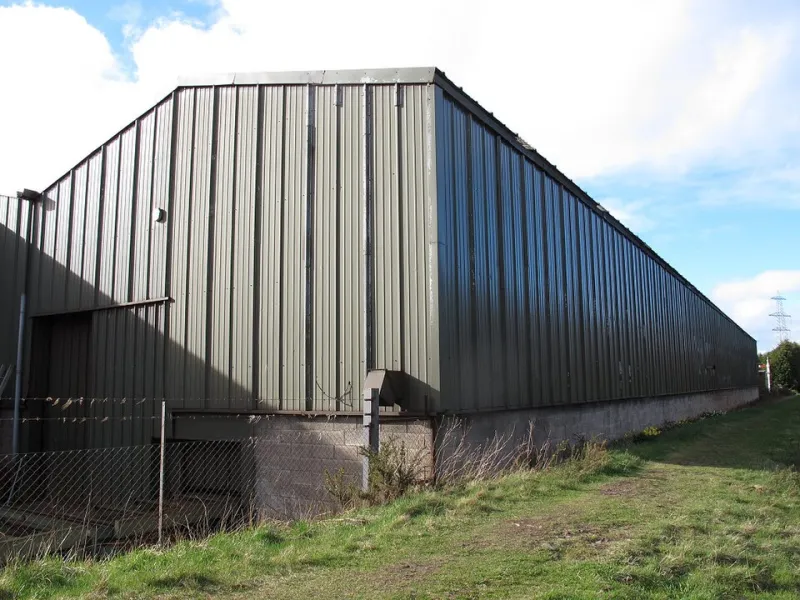
Photo: Stephen Craven , CC BY-SA 2.0, via Wikimedia Commons
The catalogue illusion
There is a persistent assumption in procurement that fabrication capacity can be summoned on demand. A buyer issues an enquiry, receives a price, places a purchase order and expects steel to arrive on site a few weeks later. For commodity components held in stock, that model has some basis. For bespoke metalwork, it is closer to fiction.
Bespoke fabrication is a sequence of dependent commitments: drawing approval, material allocation, machine scheduling, skilled labour, inspection and finishing. Each commitment consumes a slot in a programme that is already shared with other clients. In 2026, UK trade buyers who treat capacity as a button to be pressed will find themselves paying premium rates for compressed programmes, or waiting while better-prepared competitors take the available slots.
Why capacity behaves like a booking
A fabrication workshop is not a warehouse with infinite shelf space. It is a finite combination of machines, people and time. A press brake has a maximum number of hours in a week. A coded welder can only work on one joint at a time. A paint line has a cure schedule that cannot be accelerated indefinitely without compromising finish quality.
When a buyer places an order, the fabricator is effectively reserving a sequence of those finite resources. The earlier that reservation is made, the more efficiently the work can be nested alongside similar jobs, the more likely material can be bought at standard rather than premium rates, and the less likely the programme will need to absorb overtime or subcontractor costs. Capacity is therefore a booking, not a catalogue line item.
The constraints shaping UK capacity in 2026
Several pressures are reinforcing one another. Material lead times remain variable, particularly for stainless steel, aluminium extrusions and specialised plate grades. A fabricator may be able to cut and weld quickly but still be held up by a mill allocation or a finishing subcontractor’s queue. Skilled labour is another constraint: experienced fabricators, coded welders and press brake setters are not interchangeable resources, and training takes time.
Seasonal demand also matters. The UK construction and industrial maintenance cycle has familiar peaks and troughs, with holiday periods, year-end shutdowns and budget-driven spending patterns all affecting when work is released. A buyer who releases a package in November for delivery before Christmas is competing for a very different slot from a buyer who books the same package in the spring.
Early engagement is not a courtesy; it is a commercial tactic
Early engagement should not be confused with simply sending an enquiry earlier. It means involving the fabricator while the design is still fluid enough to influence material choice, joint detail, tolerance allocation and finishing specification. A workshop that sees a package at tender stage can flag long-lead items, propose a more buildable detail and reserve indicative capacity.
For trade buyers, this is a risk-management step. It does not commit the buyer to an order, but it does give the fabricator a basis for planning. In return, the buyer gains visibility of what is genuinely achievable. The alternative — issuing a fully detailed package late and demanding a compressed price — usually produces one of two outcomes: a premium price or a programme that quietly slips.
Phased orders and call-off
Where a project has repeatable elements, phased orders can bridge the gap between a single large commitment and a series of ad hoc purchases. A framework or call-off arrangement allows the fabricator to plan material and labour in advance while the buyer releases work against a schedule. This is particularly useful for balustrade packages, plant support frames, access platforms and repetitive bracketry.
The key is to make the phasing genuine. A call-off schedule that is repeatedly revised or postponed is not a booking; it is a rolling disruption. Buyers should agree release windows, minimum batch sizes and change-control rules at the outset. That gives the fabricator enough certainty to hold capacity without carrying excessive risk.
Realistic programming and the value of a buffer
A realistic programme recognises that fabrication is not the only variable. Drawing approval, material delivery, inspection and finishing all consume time. A buyer who programmes the first delivery date without allowing for these dependencies is not planning; they are hoping.
A sensible approach is to build buffers at the points where risk is highest: after drawing approval, before material release and before finishing. The buffer should be visible in the programme rather than hidden in a vague contingency. Buyers should also ask the fabricator to state assumptions explicitly — what is included in the quoted lead time, what triggers a re-programme and how changes are priced. A workshop that is transparent about its assumptions is generally easier to manage than one that promises a date without qualification.
The cost of treating capacity as a button
The commercial consequences are predictable. Compressed programmes attract premium costs: overtime, express material premiums, subcontract finishing and expedited transport. They also increase the risk of defects, because inspection and rework are the first activities to be squeezed when time is short. In the worst cases, the buyer saves nothing and inherits a package that arrives late, incomplete or requiring site modification.
In 2026, the more effective strategy is to treat fabrication capacity as a planned resource. Engage early, phase where possible, respect material and labour lead times, and programme with visible buffers. That approach will not make bespoke metalwork instant. It will, however, make it more predictable — and predictability is usually worth more than a headline price.