Getting the Brief Right Before the Steel Arrives: A 2026 Checklist for UK Stair and Balustrade Packages
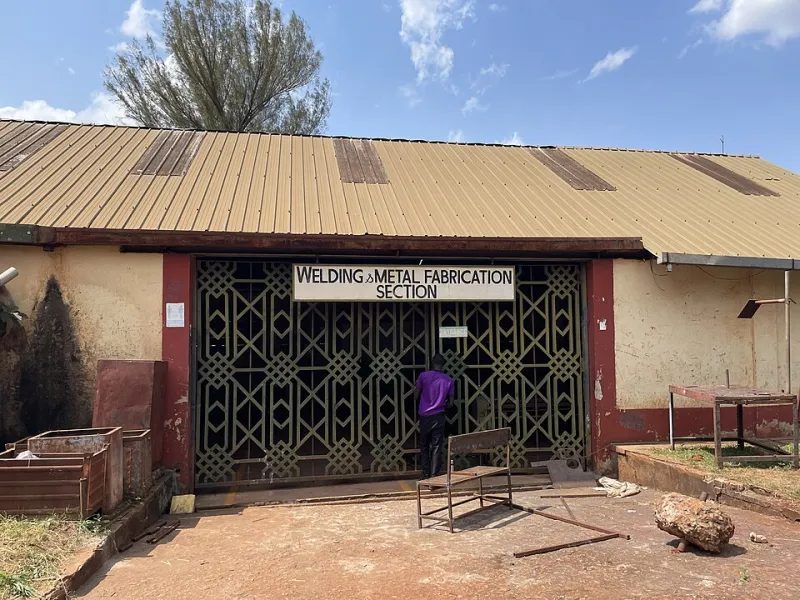
Photo: Owobusingye, CC BY 4.0, via Wikimedia Commons
For contractors and procurement teams, bespoke metalwork is rarely a standalone purchase. A stair, balustrade or framed structure sits between the structural engineer, the architect, the principal designer, the main contractor and several specialist trades. By the time steel arrives on site, most of the risk has already been created or designed out. A competitive quotation is only useful if the brief behind it is clear, consistent and properly recorded.
As 2026 procurement cycles place continued pressure on programme and cost certainty, the most effective protection is a disciplined pre-award checklist. It does not replace professional design responsibility, but it does reduce the likelihood of variations, rework and mismatched expectations after the job has been awarded.
Start with performance, not just geometry
Drawings show shape; they do not always show intent. Before approaching a fabricator, define what the metalwork must do. For stairs, that means usage and loading, rise and going, clear widths, headroom, guarding heights and infill criteria. For balustrades, it means line load performance, fixing strategy, gap limits and the intended substrate. For framed structures, it means load paths, deflection limits, connection philosophy and any allowances for services or cladding.
Ask who holds design responsibility. A fabricator may be asked to work to a fully engineered design, to develop connections from a performance specification, or to provide a design-and-build package. These are different commercial and technical propositions. State clearly which applies, and identify the documents that govern the work: general arrangement drawings, connection details, specifications, schedules and any project-specific amendments.
Survey the interface, not only the opening
A site survey should establish more than a few dimensions. The fabricator needs reliable information about datum levels, gridlines, existing structure, embedments, floor finishes, ceiling zones and access routes. On refurbishment work, apparent dimensions can be misleading; on new-build, tolerances in the concrete frame may affect the steel package.
Ask the fabricator to state what survey scope is included and what assumptions have been made. Confirm the tolerances to which the work will be manufactured and installed, with reference to the project specification and BS EN 1090-2 where applicable. Where tolerances are tight, the reason should be understood and the responsibility for achieving them agreed. Interface drawings are particularly valuable where balustrades meet raised floors, cladding, masonry or glazing.
Confirm the execution class and conformity route
For structural steelwork in the UK, EN 1090-1 factory production control and the relevant execution class are central to the specification. The buyer should confirm whether the package is structural or non-structural, and which execution class applies. EXC1, EXC2, EXC3 and EXC4 carry different expectations for inspection, welding and documentation.
Where UKCA marking or a declaration of performance is required, confirm that the fabricator’s certification covers the actual scope. A certificate held for one category of work is not automatically evidence of competence for another. For balustrades and safety-critical elements, the performance requirement should be explicit, including any testing, inspection or witness arrangements.
Specify the finish in measurable terms
“Galvanised and powder coated” is not a sufficient finish specification. State the environment, expected service life and maintenance regime. For external work, clarify whether hot-dip galvanising to BS EN ISO 1461 is required, what coating system follows, and how cut edges, welds and site repairs will be treated. For internal work, distinguish between architectural powder coating, wet paint and stainless steel finishes, and identify colour, gloss and any sample approval requirement.
Finishing is a frequent source of delay because it often sits on the critical path after fabrication. Clarify pretreatment, coating thickness, curing, handling and protection during transport. Where dissimilar metals are in contact, or where drainage and ventilation matter, raise the detail early. A finish that performs well in a showroom may fail quickly in a coastal or industrial environment.
Resolve connections, fixings and site works
Connections deserve a named owner. Confirm whether the fabricator is designing them, whether they are shown on the engineer’s drawings, or whether a hybrid arrangement applies. Establish who supplies anchors, bolts, shims, grout and sealant, and who is responsible for site drilling or welding. If site welding is proposed, confirm permits, hot-work procedures, inspection and reinstatement of finishes.
Temporary works, lifting, access and storage also belong in the brief. A stair package that cannot be delivered through the building envelope is a programme problem, not a fabrication problem. Where installation is by others, agree the interface and the condition in which the metalwork will be handed over.
Programme the approvals, not just the fabrication
Lead times should be broken down into survey, drawing approval, material procurement, fabrication, finishing, inspection, transport and installation. Finishing and approval cycles are common bottlenecks. Ask for the information required to release the work, the date by which approvals are needed, and the consequences of late design changes.
A useful tender response will identify exclusions and assumptions explicitly. It should also state what documentation will be issued at completion: material certificates, weld procedures and qualifications, inspection records, finish reports, operation and maintenance information, and conformity declarations where relevant.
A practical pre-award checklist
- Scope matrix showing what is included and excluded.
- Design responsibility and connection design ownership.
- Survey scope, datum strategy and assumed tolerances.
- Execution class, factory production control and conformity evidence.
- Finish specification by environment, standard and repair method.
- Fixing, anchoring, site welding and installation interfaces.
- Programme with approval, finishing and delivery milestones.
- Quality documentation to be issued before, during and after fabrication.
- Variation rates and treatment of design changes.
- Protection, storage and handover arrangements.
A fabricator accustomed to trade work will welcome a brief that is specific. The objective is not to overcomplicate the tender, but to make the commercial basis match the technical reality. When the steel arrives, the best outcome is not a dramatic rescue; it is a package that fits, performs and hands over with the paperwork already in order.