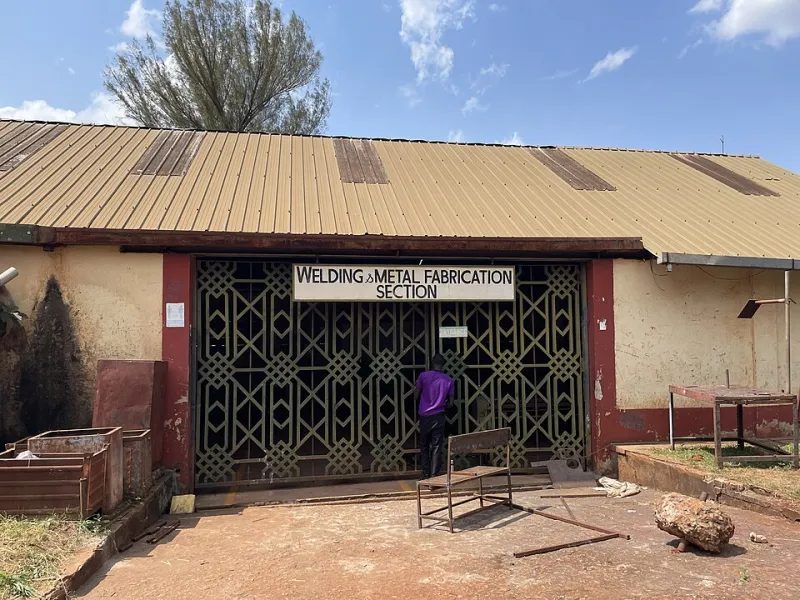
The Real Price of Lowest-Cost Fabrication: What UK Trade Buyers Should Inspect Before Award
Photo: welder inspecting steel fabrication workshop quality control documentation, via craftsmanstore.mx
There is a difference between a competitive price and a cheap one. In bespoke metal fabrication, the lowest tender is not necessarily evidence of efficiency; it may simply be evidence of a narrower scope, a lighter quality regime or an optimistic view of the work involved. For UK trade buyers, the real cost of fabrication is rarely confined to the order value. It is carried by the site team that has to make the work fit, the finishing contractor who has to repair coatings, and the project manager who has to chase missing documents at handover.
This is not an argument for selecting the most expensive fabricator. It is an argument for auditing the things that determine whether a price will hold. In 2026, with programme pressure and supply-chain variability still shaping procurement decisions, a proportionate pre-award check is a commercial safeguard rather than a technical indulgence.
Why the cheapest bid often costs more
Fabrication defects tend to surface late. A poorly prepared weld may pass a visual glance in the workshop and fail an inspection on site. A coating applied without adequate pretreatment may look acceptable in the delivery yard and deteriorate within a few seasons. Missing material certificates may not matter until the principal designer or building control asks for them. By then, the commercial leverage has usually shifted.
Rework is especially expensive because it happens at the wrong end of the programme. Cutting, welding and painting in a controlled workshop is one thing; repeating the same work at height, behind finished walls or in a live operational building is another. Hot-work permits, access equipment, fire watches and reinstatement all add cost. A saving made at tender can be consumed several times over by a single site variation.
Look at the workshop, not just the brochure
The first useful check is physical. A workshop visit does not need to become an audit of every process. It should establish whether the fabricator’s habits match the claims made in the tender. Are materials segregated and identifiable? Are jigs and measuring equipment used consistently? Is there a clear route from cutting and fit-up to welding, inspection and finishing? Are stainless steel tools kept separate from carbon steel tools?
Welding deserves particular attention because it is both safety-critical and easy to disguise with a good clean-down. Ask how welding procedures are selected and how welders are qualified for the work. Look at fit-up and preparation before the weld is dressed. Enquire about consumable storage, calibration of equipment and how distortion is controlled. The point is not to turn the buyer into a welding inspector; it is to see whether the fabricator has a system rather than a habit.
Finishing is the other workshop area where cheap work becomes visible. Ask how surfaces are prepared, how coating thickness is checked and how damaged areas are repaired. For galvanised work, ask how venting and drainage are handled and how batch records are kept. For powder coating, ask about pretreatment and cure. A finish specification is only meaningful if the workshop can demonstrate that it follows it.
Read the paperwork like a buyer
Documentation is often treated as an administrative afterthought, yet it is one of the clearest indicators of fabrication discipline. A fabricator working to EN 1090 should be able to explain the scope of its factory production control certificate and the execution classes it routinely handles. It should be able to provide redacted examples of material certificates, weld procedures, welder qualifications, inspection and test plans, dimensional records and finish reports.
For structural steelwork, material traceability matters. Certificates to EN 10204 3.1 are commonly expected for structural materials, and heat numbers should be traceable to the project. Inspection records should show what was checked, by whom and against what acceptance criteria. Where non-destructive testing is required, the reports should be available and legible. A folder of generic certificates issued for a different project is not evidence of control.
Ask also how revisions are managed. Bespoke fabrication is vulnerable to drawing changes, and a fabricator that cannot show a clear revision trail is a risk to both programme and liability. The same applies to non-conformance: how are defects recorded, dispositioned and closed out? A confident fabricator will have an answer; a cheap one may prefer not to be asked.
Questions that separate confidence from optimism
- Which parts of the work are subcontracted, and how are those suppliers controlled?
- Who signs conformity declarations, and does the certificate cover this scope?
- What inspection records will be issued with the finished package?
- How are material certificates linked to the actual work delivered?
- What is the standard finish repair procedure after site installation?
- How are drawing revisions and change instructions controlled?
- What are the realistic lead times for approvals, finishing and delivery?
- Can the buyer visit the workshop before award?
- What exclusions and assumptions sit behind the price?
These questions are not adversarial. They are the normal language of trade procurement. A fabricator that routinely serves contractors should be able to answer them without preparation. If the answers are vague, the buyer should treat that vagueness as a risk, not as a negotiating opportunity.
Keep the audit proportionate
The depth of scrutiny should match the risk. A simple internal frame may not justify the same documentation regime as an external balustrade on a coastal site, a safety-critical stair package or a structure with complex connections. Higher execution classes, aggressive environments and tight tolerances all call for closer checking. The objective is not to demand nuclear-grade paperwork for every bracket; it is to ensure that the quality requirements in the order are realistic, verifiable and priced.
A pre-award meeting, a workshop visit and a sample documentation pack will usually reveal more than a long questionnaire. Record the findings and carry the agreed quality requirements into the purchase order. Make documentation a condition of final payment where appropriate, and identify the person responsible for receiving and checking it.
Lowest-cost fabrication is not automatically bad fabrication, but it is a claim that needs evidence. The cheapest package is the one that arrives correctly, fits first time and hands over with records that satisfy the project. UK trade buyers who audit welding, finishing and documentation before award are not adding bureaucracy; they are protecting the programme from costs that rarely appear in the tender comparison.