From Drawing to Dispatch: A Trade Buyer’s Walkthrough of a UK Fabrication Workshop
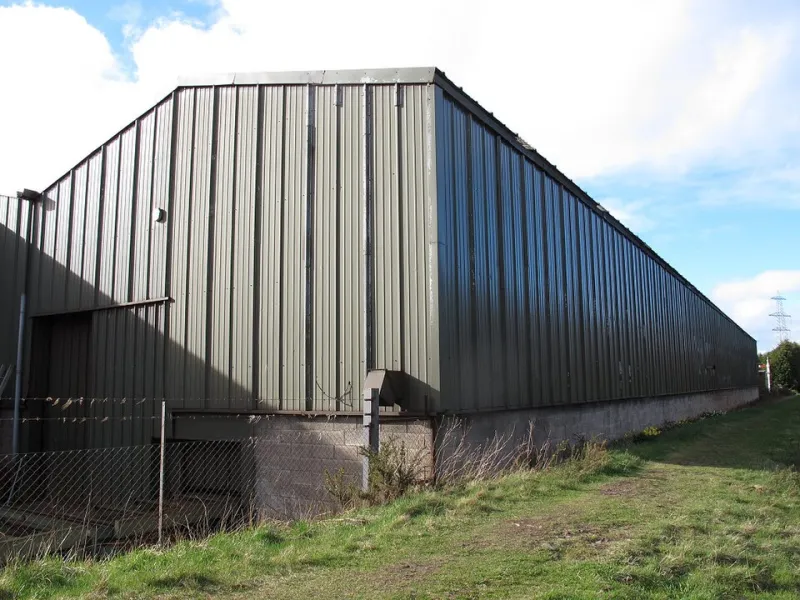
Photo: Charles Rispin, CC BY-SA 2.0, via Wikimedia Commons
The drawing review is where tolerance is won or lost
A fabrication workshop is often judged by its newest machine. In practice, the most important capability sits upstream of the shop floor: the drawing review. Before a single sheet is nested or a bar is cut, a competent fabricator should interrogate the enquiry pack for missing dimensions, ambiguous weld symbols, incompatible tolerances, unspecified material grades and finish requirements that cannot survive the intended service environment.
For UK trade buyers, this stage is a useful test of engineering literacy. Ask whether the fabricator returns marked-up drawings or a written review note. Ask how they handle datum schemes, whether they work to general tolerances such as BS EN 22768 or project-specific ones, and whether they understand the execution class implications under BS EN 1090 where structural steelwork is involved. A workshop that simply prices the drawing without questioning it is not offering value engineering; it is deferring risk to the first article inspection.
Material selection and traceability
The next checkpoint is material. Stock availability, mill lead times and certification requirements all influence what can realistically be programmed. A fabricator should be able to explain whether the specified grade is held in stock, subject to mill order, or open to a technically equivalent substitution. For many trade clients, the distinction between a 3.1 mill certificate and a general certificate of conformity matters, particularly where pressure parts, structural members or safety-critical bracketry are involved.
Batch size also shapes material strategy. A one-off bracket may be cut from remnant stock; a repeat programme of 200 assemblies may justify dedicated nesting and a mill allocation. Buyers should ask how remnants are controlled, whether heat numbers are transferred to the works order, and how material is stored to avoid surface damage or mixed grades. Traceability is not paperwork for its own sake; it is the difference between a replaceable component and an unverifiable one.
Cutting: what the machine actually buys you
Laser cutting, plasma cutting and waterjet cutting each offer a different balance of speed, edge quality, thickness range and heat input. For thin-gauge sheet, fibre laser cutting typically delivers clean edges and tight repeatability. For thicker plate, plasma may be more economical, but the cut edge and heat-affected zone need to be allowed for in the weld preparation. Waterjet is slower but can be appropriate where cold cutting, tight tolerance or mixed materials are required.
The trade-focused question is not simply which machine the workshop owns. It is how nesting, calibration and first-off checks are managed. A well-run cutting cell should be able to show nest utilisation, consumable maintenance records and a first-off dimensional check before full production. Buyers assessing a fabricator should ask what tolerance the cutting process realistically holds on the specified thickness, not what the brochure claims for a demonstration sample.
Press braking and forming
Press braking is where many bespoke packages become either straightforward or expensive. Bend allowance, tooling selection, backgauge repeatability and springback all affect whether a formed part closes up correctly in assembly. For small batches, the cost of custom tooling may outweigh the benefit; for repeat work, a dedicated jig or tool set can pay back quickly through reduced set-up time and consistent bend sequences.
A workshop with genuine forming capability should be able to explain its tonnage limits, maximum bend length, tooling inventory and approach to first-off approval. Trade buyers should inspect whether bend sequences are documented and whether critical angles are checked with digital protractors or angle gauges. On thin-gauge work, cosmetic marking from tooling is also a legitimate quality point: what looks acceptable on a mild steel bracket may be unacceptable on visible stainless or aluminium components.
Welding, fabrication and distortion control
Welding capability is often reduced to a list of processes: MIG, TIG, MMA or spot. That is only the beginning. The more meaningful questions concern procedure and control. Are welders qualified to the relevant standard? Are welding procedure specifications available? Is there a defined inspection regime, and does it include dimensional checks before, during and after welding?
Distortion control is a particular marker of workshop maturity. Jigs, tacking sequence, heat input management and post-weld correction all influence final geometry. For structural or safety-related work, buyers should also establish whether non-destructive testing is required and who witnesses it. A fabricator that can talk credibly about weld mapping, inspection points and concession control is usually better equipped than one that treats welding as a purely cosmetic operation.
Finishing and the subcontract chain
Finishing is frequently the stage where programme risk accumulates. Pretreatment, paint systems, galvanising and powder coating each introduce their own lead times and quality variables. A fabricator may operate its own paint shop or rely on approved subcontractors; both models can work, but the buyer should understand where responsibility sits.
Ask how surface preparation is specified, whether dry film thickness is measured, and how touch-up and repair are handled after assembly. For external UK steelwork, the finish specification should be matched to the service environment rather than chosen by habit. The workshop’s role is to fabricate for the finish, not to treat coating as a last-minute afterthought.
Final inspection and the data pack
Dispatch should be preceded by a final inspection that confirms dimensions, weld quality, finish and identification against the works order. For repeat or safety-critical work, a first article inspection report provides a useful baseline. For structural packages, the data pack may need to include mill certificates, weld inspection records, test certificates and declared conformity information.
A trade buyer assessing a fabricator should ask to see a typical inspection plan and a sample data pack. The workshop’s true strength is not the newest press brake or the largest laser; it is the system that links drawing review, material traceability, process control, inspection and dispatch. That system is what protects the buyer when the drawing is imperfect, the material is delayed or the finish is more demanding than it first appeared.