Beyond Colour: Engineering External Steel Finishes for UK Conditions in 2026
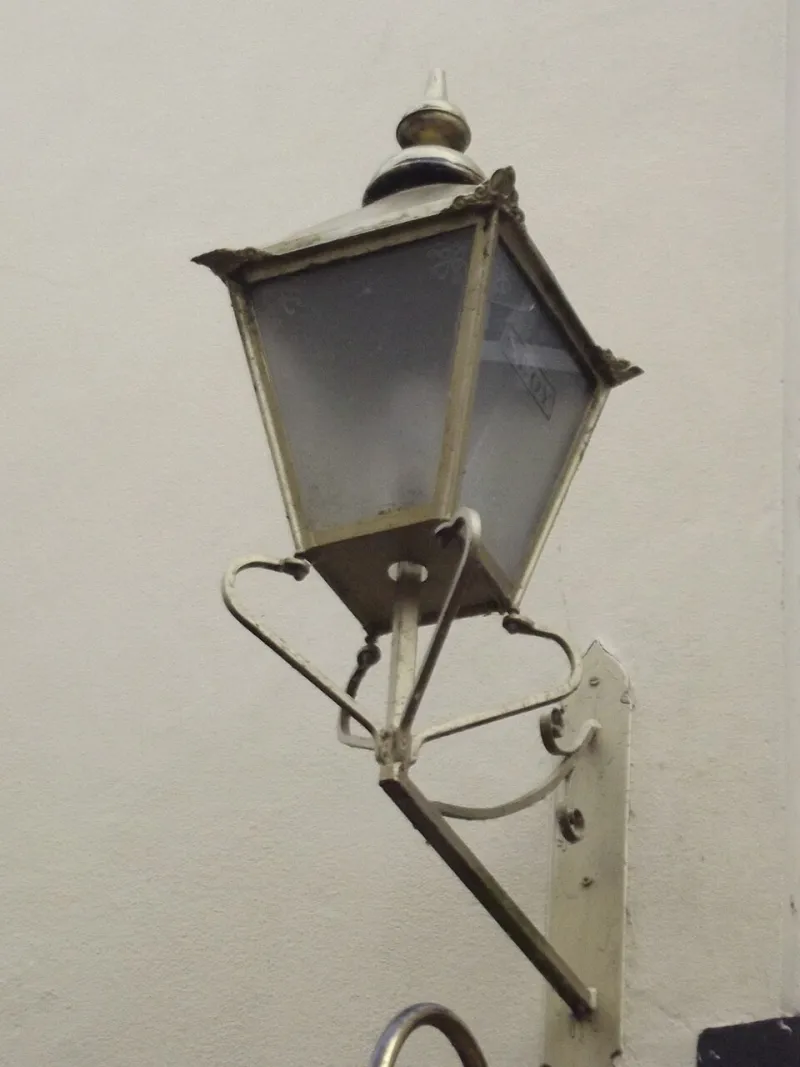
Photo: Elliott Brown from Birmingham, United Kingdom, CC BY-SA 2.0, via Wikimedia Commons
External steelwork in the UK is asked to perform in conditions that punish optimistic specifications. Wind-driven rain, coastal chloride, winter de-icing salts, industrial fallout and long periods at high humidity all act on the same component. A finish that looks appropriate on a colour card can become the weakest part of a bespoke package if it has been selected after the geometry, welds and drainage details are fixed. For trade buyers and specifiers in 2026, the more reliable approach is to treat the coating as part of the fabrication design, not as a final decorative choice.
Establish the corrosion category first
BS EN ISO 12944 remains the common reference for protective paint systems on steel structures. It sets out corrosivity categories from C1 to CX, with C3 representing a medium urban or industrial environment, C4 a high-corrosivity coastal or industrial setting, and C5 a very high-corrosivity environment. A rural inland site may sit closer to C2, while a coastal scheme in Cornwall, a marine-adjacent site in Scotland or a sheltered urban courtyard with persistent dampness can behave more aggressively than the general category suggests.
The specification should state the intended environment and the required durability band, not simply name a coating. A common error is to write galvanised and painted without defining where, how and for how long. A better brief says that the component is external, exposed to de-icing salts, expected to remain serviceable for a defined period, and must be inspectable and maintainable. That gives the fabricator a basis for recommending a system rather than quoting a colour.
Details that decide coating performance
Water must be able to leave the component. Pools on ledges, water trapped behind plates, unsealed box sections and crevices between two close-fitting surfaces are all points where corrosion begins early. Box sections should be sealed or vented deliberately, with the decision recorded. Weep holes should be large enough to work, positioned at the low point and kept clear of weld spatter. Sharp edges should be rounded or dressed because coatings pull back from a knife edge, leaving a thin zone that fails first.
Weld preparation matters as much as the coating itself. Slag, porosity, undercut and heavy spatter create holidays and uneven film thickness. Stitch welding may be acceptable structurally but can create a crevice that holds water. Where a component will be hot-dip galvanised, vent and drain holes must be designed in from the start, and the fabricator should confirm that the section can be dipped without trapping air or creating distortion. These are drawing-stage conversations, not workshop corrections.
Galvanising, powder coating, wet paint, stainless and patina
Hot-dip galvanising to BS EN ISO 1461 offers robust sacrificial protection, particularly for structural brackets, frames and balustrade components that are difficult to maintain. The finish is not a paint and should not be specified as though it were. It has a characteristic appearance, requires appropriate venting and drainage, and may need a duplex system of galvanising plus paint where colour or additional durability is required. Duplex systems can extend service life, but only when the paint is compatible with the galvanised surface and the pretreatment is correct.
Powder coating provides a durable factory-applied finish with a wide colour range, but its performance depends on pretreatment, substrate condition and edge coverage. On galvanised steel, the conversion coating and primer must suit the substrate. On complex fabrications, recesses and shielded areas can receive a lower film build than flat panels. Architectural polyester powders are generally more appropriate for external building elements than standard indoor powders, and the specification should say so.
Wet paint systems remain valuable for large or complex assemblies and for site-applied repair. A typical external system might use a zinc-rich or epoxy primer with a polyurethane topcoat, but the exact build depends on the corrosivity category and expected life. Application conditions matter: steel temperature, dew point, humidity and surface cleanliness all affect adhesion. A wet paint specification that ignores application conditions is only half a specification.
Stainless steel is not maintenance-free. Grade 304 is suitable for many inland architectural applications, while grade 316 is more resistant to chlorides and is often preferred for coastal or de-icing-salt exposure. Stainless components should be cleaned after fabrication, with weld discolouration removed and the surface passivated where required. Tea staining is a common visual issue in coastal UK locations and is a maintenance matter as much as a material selection matter.
Weathering steel can provide a controlled patina, but it is not appropriate for every external detail. Run-off can stain adjacent masonry, paving and light-coloured surfaces, and the steel needs exposure to wet and dry cycles to form a stable patina. It should be detailed so that staining is anticipated rather than discovered.
Samples, inspection and touch-up
Approval should be against a defined sample or test panel, not a screen image. The sample should represent the substrate, pretreatment, coating system, colour and gloss level. For powder coating, the approval may include a coated section of the same profile. For wet paint, a test panel applied under representative conditions gives more useful evidence than a colour chip alone.
Inspection should cover surface preparation, dry film thickness, adhesion, visual finish and coverage of edges and recesses. On galvanised work, coating thickness and appearance should be checked against the relevant standard. On painted work, readings should be taken across the component rather than at one convenient point.
Touch-up is a system, not a tin of paint. Damaged galvanising should be repaired with a suitable zinc-rich product, and damaged paint should be repaired with compatible primer and topcoat. Ordinary gloss paint over a damaged zinc surface is not a repair. The fabricator and the buyer should agree who is responsible for touch-up after transport, site handling and installation, and what materials will be supplied for future maintenance.
Warranties that mean something
A coating warranty is only as good as the conditions attached to it. The buyer should expect the warranty to define the environment, the approved coating system, the surface preparation, the inspection regime and the maintenance required. A single statement of a ten-year warranty without those details is difficult to enforce and easy to misunderstand.
Where a long service life is required, a duplex system or a higher-build paint system may be justified, but the whole-life cost should include inspection and maintenance. Access for future repainting is a design consideration. A balustrade that can be inspected and touched up is a better asset than one that must be removed to be maintained.
For bespoke metalwork, the finish should be settled before the steel is cut. Apcemmert Metal Fabricators treats coating selection as an engineering conversation that belongs with the drawing review, weld detailing and procurement schedule. The colour is the visible outcome; the performance is the result of decisions made much earlier.