At the Interface: Galvanic Corrosion Checks Before Bespoke Metalwork Drawings Are Released
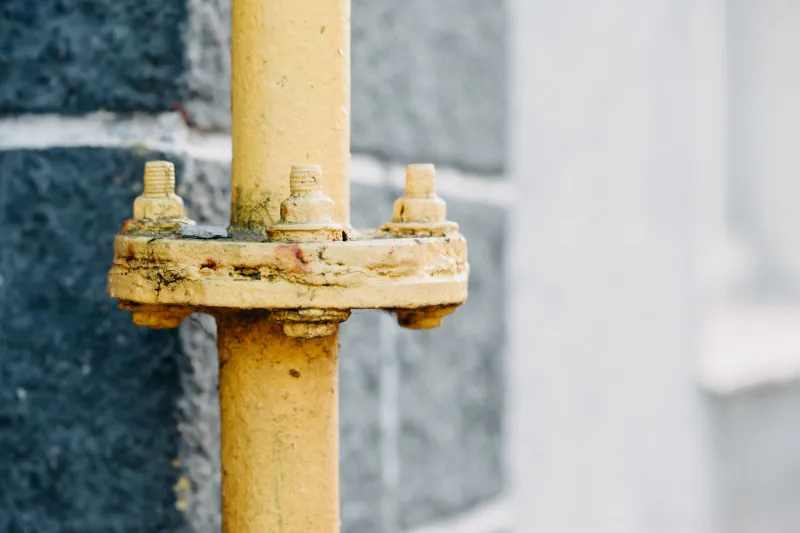
Galvanic corrosion is often described as a hidden failure, but the mechanism is not mysterious. When two dissimilar metals are joined in the presence of an electrolyte, the less noble metal becomes anodic and gives up material. In bespoke metalwork, the electrolyte may be no more than a film of condensation, a pocket of retained water or run-off from a nearby façade. The joint that receives least attention in the drawing package — the fixing — is frequently where the risk concentrates.
For UK trade buyers, this matters because the consequences are rarely visible at handover. A balustrade, canopy frame, secondary steel assembly or plant support can leave the workshop looking correct and still carry a latent durability problem at every bolt, screw or anchor. The purpose of this guide is not to replace specialist corrosion advice, but to set out the checks that should be built into procurement before the fabrication drawings are released.
Start with the joint, not the steel
A material schedule that lists galvanized steel, stainless steel and aluminium separately can create a false sense of control. Corrosion risk lives at the interfaces between those materials, and the fixing is usually the smallest interface with the highest consequence. A stainless bolt through a galvanized cleat, an aluminium component fixed with zinc-plated screws, or a mild steel bracket isolated from a stainless post by a washer that was never specified are all common enough in bespoke work.
The buyer’s first check is therefore a combined substrate and fastener schedule. Ask the fabricator to identify every point where dissimilar metals meet and to state the fastener specification at each location. This should include the base material, the fastener grade, any washer or bush, the coating system and the assumed exposure condition. Where the schedule is silent, the site team will make its own choice from the van — and that choice may not match the design intent.
Read the environment as a material
Galvanic risk is not uniform across the UK. A rural inland installation may tolerate details that would fail quickly on a coastal frontage, near an industrial process or beside a road that receives winter salt. Sheltered recesses, horizontal ledges, unsealed cavities and areas that never dry are more demanding than freely draining external faces. The same fixing detail can behave very differently depending on where water sits and how long it remains.
Procurement should therefore record the exposure assumption in plain terms: coastal, industrial, urban, rural, or a combination; whether de-icing salts are likely; whether the assembly is washed by rain or sheltered from it; and whether internal conditions are dry, humid or intermittently wet. References to corrosivity categories under BS EN ISO 9223 can help align the specification, but the practical question is simpler: where will water collect, and what will it carry?
Isolation details that survive site conditions
Isolation washers and bushes are often named in specifications without enough thought about installation. A nylon washer can separate two metals electrically, but it can also compress, crack or be omitted if the fixing is over-torqued or the hole is poorly aligned. A sealed joint may keep water out initially, yet trap it later if drainage is absent. The detail needs to be buildable, inspectable and repeatable on site.
Ask how the isolation is achieved, not merely whether it is specified. Is there a continuous barrier, or only a washer under the head? Is the fastener shank isolated from the hole? Are dissimilar metals separated at the bearing faces as well as the shank? If a coating is used as the barrier, how are cut edges, drilled holes and damaged areas treated? These questions are particularly important where site drilling or adjustment is expected, because the workshop detail may not survive the first site modification.
Coatings are not a substitute for detailing
Zinc coatings, paint systems and powder coatings can delay galvanic action, but they are not a licence to ignore material compatibility. A coating that is damaged at a fixing point, or that cannot be maintained in a concealed location, may provide less protection than the drawing assumes. Cut edges and thread surfaces are common weak points. So are interfaces where water can sit against a coated surface for long periods.
For UK external works, the buyer should check that the coating system is appropriate to the exposure and that the fixing detail does not compromise it. Stainless fasteners into galvanized steel, for example, may be acceptable in some conditions, but the specification should be deliberate rather than inherited from a previous job. The same discipline applies to aluminium components, where contact with steel or zinc-coated items can shift the risk sharply depending on moisture and chloride exposure.
Questions to put to the fabricator before drawing release
A short set of questions can expose whether the fixing detail has been engineered or merely assumed. The buyer should ask:
- Which locations involve dissimilar metals, and what is the fastener and isolation specification at each one?
- What exposure condition has been assumed, and does the detail rely on drainage, sealing or maintenance to remain effective?
- Are isolation washers and bushes specified by type, size and installation method, or only by a generic note?
- How are cut edges, drilled holes and site-made adjustments protected?
- What inspection can be carried out at handover, and what maintenance regime is expected?
- What evidence supports the proposed combination — published compatibility guidance, project experience or test data?
The answers should be recorded in the procurement file, not left in a drawing revision cloud. If the fabricator cannot explain the fixing strategy in plain terms, the detail is probably not sufficiently developed for release.
Procurement control points
Galvanic corrosion is best controlled before the first hole is drilled. The buyer’s leverage is greatest at specification and drawing review, when material combinations can still be changed and isolation details can be made buildable. Once the assemblies are fabricated, the remaining options are inspection, remedial work and maintenance — all more expensive and less certain.
A practical control point is to require a fixing and interface schedule as part of the drawing package for any bespoke metalwork exposed to weather, salt or persistent moisture. The schedule need not be elaborate, but it should be specific. It should match the material schedule, the coating specification and the site exposure assumptions. Above all, it should show that someone has considered what happens where two metals meet.
The fixing is a small part of the order by value and a large part of the durability risk by consequence. Treating it as an engineered interface, rather than a consumable selected at the end of the job, is one of the simplest ways UK trade buyers can protect the service life of a bespoke fabrication.