The Substitution File: Approving Steel Changes Before the Saw Starts
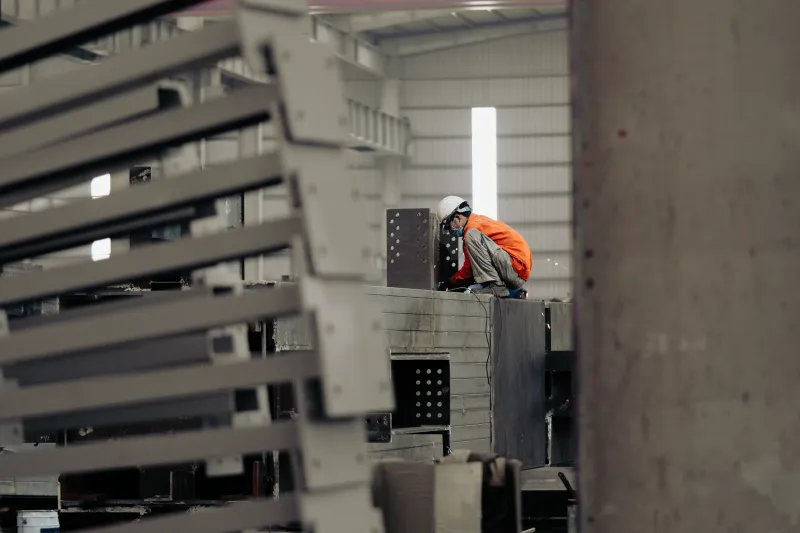
A substitution request rarely arrives as a formal engineering change. More often it appears as a brief email or a note on a delivery ticket: the specified grade is unavailable, a stockholder has an alternative, or a mill has rolled something close. The word 'equivalent' is used, and the cut list is waiting. In bespoke metalwork, that is the point at which a commercial convenience can become a technical unknown. A substitution file makes the change reviewable before any material is marked, cut or welded.
The commercial pressure behind the request
Fabrication programmes are planned around mill lead times and stock availability. When a particular section or plate is delayed, the quickest route may appear to be a different grade from the same stockholder. The pressure is understandable. A cut list released late affects workshop capacity, delivery dates and site sequences. However, the fact that material is available does not establish that it is suitable. The review should begin with the specification, not with what the stock list can offer.
Grade equivalence is a set of properties, not a single figure
The most common error is to compare yield strength alone. Two steels may both be described as S275 or S355 and still differ in impact grade, delivery condition, chemical composition and dimensional tolerance. A designation such as S355J2+N carries requirements for impact energy at low temperature and normalised rolling. S355JR does not. Substituting one for the other changes the design assumptions, particularly where the execution class and the engineer's calculations rely on toughness or through-thickness properties.
For stainless steel, the distinction between 304 and 316 is not a matter of preference. The molybdenum content in 316 improves resistance to chlorides, and a substitution in a coastal or wash-down environment can alter the expected service life. Aluminium alloys behave similarly: 6082 T6 and 6061 T6 are not interchangeable in every application, despite similar nominal strengths. The review must consider the full designation, the relevant British or European standard, and the intended exposure.
Documents that make the decision auditable
A substitution cannot be assessed from a description on a delivery note. The review requires the mill certificate, normally to EN 10204 3.1 for structural steel, showing the heat number, grade, dimensions and the results of chemical and mechanical testing. Where the material comes through a stockholder, the certificate should be traceable to the actual heat and to the delivered items. A summary or a generic certificate is not sufficient.
The certificate should be checked against the specification, not merely filed. Does the heat number match the material? Does the certificate cover the delivered thickness and condition? Are impact results reported at the required temperature? For CE or UKCA marking under EN 1090-1, the substitution also has to fit the factory production control records and the execution class declared for the order. If the certificate cannot be linked to the cut list, the substitution is not yet controlled.
Design and fabrication consequences
Even where the grade is broadly suitable, the workshop consequences need assessment. Weldability depends on carbon equivalent and section thickness; a material that requires preheat or different consumables changes the fabrication method. Galvanizing is another consideration. Silicon and phosphorus levels affect the coating reaction, and some steels produce excessively thick or brittle coatings in the zinc bath. That is a finish issue, but it originates in the material choice.
The review should also consider machining, forming, bolted connections and tolerances. A substitution that is acceptable for a plain plate may not be acceptable for a machined component or a connection designed around a specific bolt grade. The responsible engineer or designer should confirm the change against the original design assumptions. The workshop should not make that judgement on the day the saw is booked.
A practical approval route
A controlled route does not need to be elaborate, but it does need to be consistent.
- Raise the request in writing. Record the specified material, the proposed substitute, the reason, the quantity and the items affected.
- Attach the supporting documents. Include the mill certificate, the standard designation and any stockholder traceability information.
- Refer the request for technical review. The reviewer should be competent to assess the design and execution consequences, not simply the availability.
- Record the decision. State whether the substitute is accepted, accepted with conditions, or rejected. Conditions may include additional testing, revised welding procedure, or a restriction on application.
- Update the controlled documents. The cut list, drawings, inspection and test plan and traceability records should reflect the approved change before fabrication proceeds.
- Close the loop. Inform the workshop, the client and any relevant third-party inspector. Retain the record with the project quality file.
Verbal approval has no place in this sequence. A phone call may speed up a query, but the decision should be confirmed in writing before material is released to the saw.
Traceability after the cut
Once a substitution is approved, traceability does not end at the certificate. Heat numbers should be transferred to cut components where the specification or execution class requires it. The as-built records should show what was actually installed, not what was originally drawn. If the substitution affects CE or UKCA marking, the technical file should be updated accordingly. This is particularly important for structural steelwork, where the declared conformity depends on the material actually used.
Conclusion
A substitution request is not inherently a problem. Mills roll what they roll, stockholders carry what they carry, and programmes sometimes need flexibility. The problem is an undocumented change that is treated as equivalent because it is available. By requiring a written request, a certificate, a technical review and a recorded decision before the cut list is released, UK trade buyers can keep substitution within the same quality system as the rest of the fabrication. That is how 'equivalent' becomes a checked fact rather than a workshop assumption.